
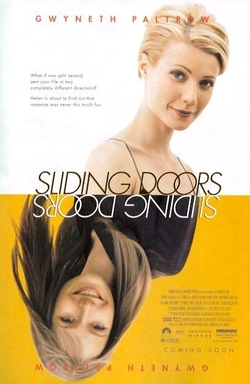
Theatrical release poster of the movie Sliding Doors.
It is a long time ago. I’m growing up in a small village in the rural west of England. I’m not saying how long ago as the reality of growing up in this village is, looking back, that it feels as if it could have been any time between 1900 and 1980. Is this what makes a protest historian?
The village has been in the possession of the same family since the thirteenth century with the current landowner still living in the manor house last substantially altered in the nineteenth century but dating back to the sixteenth century. The family still own almost all the farmland and three-quarters of the houses. If this suggests paternalistic, if not feudal, social relations to you then you would be pretty much correct.
Both my maternal grandparents were ‘in service’ for the whole of their working lives (my grandmother had to leave service once she had my mother) with my grandfather working for the estate for a considerable period of time. They were granted accommodation in the village but were moved around by the estate owners at will. Is this what makes a protest historian?
Memories of this older generation’s experiences of living with the estate have always been with me, passed down seemingly without fuss and naturalistically. One family story is that when my grandmother’s dog had the temerity to stray on the manor house front lawn the estate owner had it shot. My mother could remember having to courtesy when the estate car drove past even when empty and her father was the chauffeur. In my youth there were a small number of rented-out flats in the house. We were friends with one family but could only visit them via the muddy back drive. The village fields were my playground, but invisible barriers prevented me from putting one foot on the front lawn. Is this what makes a protest historian?
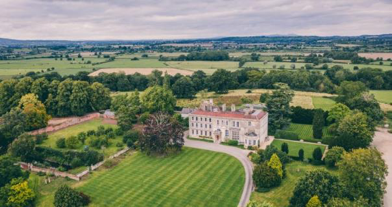
Manor House, front drive and prohibited lawn
Punk music barely makes it to my part of the world but does lead me to switch from the rather middle of the road ‘Sounds’ to the more radical ‘New Musical Express’, sharpening my wider political views. And yet, I don’t go to university and get a job with a local insurance company. Enough said. Doors slide.
Thatcher, the miners strike and Falklands War happen. I know of only one other person in my monument to boredom who thinks the way I do. Is this what makes a protest historian?
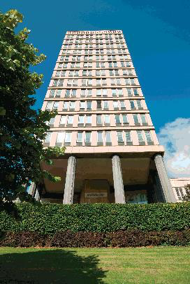
Boredom, boredom
B’dum, b’dum
In search of escape I eventually go to night school to take a history A level as I thought I wanted to get on the management training route. I didn’t. What instead happens is that the teacher also lectured at my local College of Higher Education and he suggested I take their history degree. Sliding doors: is this what makes a protest historian?
The pattern repeats with my degree. I’m still thinking in terms of higher education leading me to a commercial career but then the lightbulb: a single lecture on the historical geography of the Yorkshire woollen industry. “I want to do that” I realise and start applying for PhDs. Sliding doors – what would have happened had I not gone to that lecture? And then this same lecturer suggests a topic and a body of material few have worked with. How can I turn him down? Sliding doors: is this what makes a protest historian? What would have happened had Charles Withers not been lecturing at this obscure college in the west of England?
I’m finally a happy PhD student!! Then, one day into the long slog I go for lunch with Leah Leneman who alerts me to material neither I nor my supervisors were aware of. This material transforms my thesis. As does the month I spend on North Uist with John MacInnes. Two more doors slide.
None of this made me a protest historian but it is the context from which the historian – actually historical geographer – emerged.
And if we are to fully understand acts of popular protest then we must place context – the local and particular context – at the heart of our analyses. We must give due diligence to the ways in which local environments of protest underpin, inform and shape any and every event.
To illustrate this claim I turn to the environment and context from April’s blog, that of Northton farm and Scarista township on west Harris, albeit over a century later. Northton farm barely made it to the twentieth century being broken down into some 42 crofts in 1901 under the terms of the Congested Districts Board Act of 1897. By the 1930s the attitudes of crofters there had started to resemble that of a “cuckoo in the nest”. The neighbouring west coast farms remained largely free of smallholders but were, by 1926, coming under pressure from crofters and cottars in the Bays of Harris. It was to this “moonscape” where their ancestors had been cleared not long after William MacGillivray brought his petition to the Inverness sheriff court in 1807. Paralleling and opposing these claims and threats, however, Northton crofters were demanding extensions to their crofts onto Scaristaveg farm. They too threatened to seize land if not granted to them and promised to resist claims and incursions from anyone else. Small-scale seizure from Northton took place in March 1926 which was almost immediately replicated by a competing group from the district.
In this tussle the non-human world was both prominent and active agent of protest. Boundary fences between crofting townships and farms or sporting estates had long been points of friction and weapons of everyday resistance. This was the case in the west of Harris. By 1928 the boundary fence between Northton and its immediate neighbour has been down ‘for many years’ with no means to prevent cattle and sheep moving not only across Kyles farm but also Scaristaveg and Scaristavore as there were no effective boundaries to these either. These farms were all being considered for schemes of land settlement by the Bard of Agriculture and it was this that was generating the angst felt in Northon. As the Board’s sub-commissioner reported: ‘the only barrier’ to hold the Northton crofters in ‘would be a Township of Crofters bounding at Scaristaveg’.
The situation was the same at another west coast farm (Borve) where ‘over 500 head of sheep’ belonging to crofters from the Bays district had free but illegal access to the farm grazing. This was occasioned by the absence of fencing which had never been built by the very same people it was meant to constrain. In this way, land seizure on Borve and other farms across the west of Harris was performed by sheep and cattle rather than people.
As we are exploring for the timeframe of ‘Resistance to “improvement”’, but can be certain for land disturbance after 1914, whenever and wherever protest occurred the human and non-human were indissolubly bound and acted together. But full appreciation of this interaction of nature, space, culture and society – of local environments of protest – can only emerge from a full engagement with the local context.
It is this attention to the interaction of the human and non-human worlds that makes for the most convincing protest history and is the making of a protest historian.
Leave a Reply